



In today’s globalized world, where cultural borders are increasingly porous, the question arises: Can a single cultural identity survive in a multicultural society? This question is not only profound but crucial, as it delves into the relationship between individual identity, national culture, and the broader, increasingly diverse social fabric.
We live in societies where migration, media, and technology have merged cultures and traditions, allowing for the mixing of values, practices, and beliefs. But at the same time, many societies continue to uphold traditional, singular identities, often defined by ethnicity, religion, or national origins. The challenge, then, lies in how these identities adapt or clash with the new multicultural realities.
The Essence of Cultural Identity
At its core, cultural identity is about a sense of belonging. It is a deep-rooted understanding of one’s place in the world, shaped by family, history, language, religion, and shared experiences. It gives individuals the language to express who they are, where they come from, and how they relate to others. A single cultural identity, therefore, can offer a sense of stability and continuity—qualities that are vital for personal and collective well-being.
However, in a multicultural society, identity is rarely fixed. Multiculturalism thrives on the recognition and acceptance of diverse identities. This raises the question of whether a single, static cultural identity can hold its ground in a society characterized by constant interaction, blending, and fluidity of cultural norms.
The Evolution of Multicultural Societies
Multicultural societies are not a new phenomenon. Over centuries, the movement of people, whether through colonization, trade, or migration, has created societies where multiple cultures coexist. Think of cities like New York, London, or Singapore—urban hubs where different ethnicities, languages, and religions thrive side by side.
This mixture has often led to a fertile ground for the emergence of hybrid identities. People may retain aspects of their cultural heritage while simultaneously adopting new cultural practices. This process—referred to as acculturation—allows individuals to adapt without fully abandoning their cultural roots. In the modern world, this evolution is particularly visible in younger generations, who navigate between cultures effortlessly, often embodying a fusion of multiple influences.
However, as much as multiculturalism promotes inclusivity, it also presents challenges for those who maintain strong ties to a singular cultural identity. These individuals may feel that their traditions, language, or values are being diluted or threatened by the influx of foreign cultures. This tension between integration and preservation lies at the heart of the debate on cultural identity in a multicultural world.
Challenges to a Singular Cultural Identity
Globalization and Cultural Homogenization
Globalization is one of the primary forces reshaping cultural identities worldwide. With the spread of Western media, the proliferation of social media platforms, and the ubiquity of global brands, cultures are becoming increasingly homogenized. Music, fashion, food, and even ideals about beauty and success are often influenced by dominant cultures, especially Western ones. As a result, local customs and traditions can sometimes feel overshadowed by global trends.
In a multicultural society, this global influence can make it harder for a singular cultural identity to maintain its distinctiveness. People from all backgrounds are exposed to similar media, advertisements, and entertainment, which can lead to a blending of cultural practices that obscures the boundaries between identities. A young person in New Delhi might wear jeans, listen to pop music, and order pizza as frequently as a teenager in Los Angeles. In this context, traditional cultural markers such as clothing, cuisine, or even religious observances may appear outdated or irrelevant to younger generations.
Immigration and the Redefinition of National Identity
Immigration plays a critical role in transforming national identities. Countries that were once relatively homogenous, with clear cultural boundaries, are now becoming more diverse as people from various parts of the world settle in new lands. This raises important questions about what constitutes “national” culture. Can a nation continue to assert a singular cultural identity when its population is made up of people with different traditions, languages, and beliefs?
The experience of migration often leads to a process of cultural exchange. Immigrants bring their own customs, languages, and foods, which enrich the host country’s cultural landscape. However, this also creates a tension between preserving a national identity and integrating new cultural influences. Some argue that multiculturalism weakens national unity, while others assert that it strengthens a country by making it more inclusive and adaptive.
Religious and Ethnic Identity in a Multicultural Society
Religion and ethnicity are often central to cultural identity. In societies where multiple religions and ethnicities coexist, individuals may feel pressure to either embrace a universal cultural identity or cling to their specific religious or ethnic roots. In some cases, this can lead to tension, as minority groups fight to preserve their distinct religious practices or languages, while others advocate for a more unified, secular national identity.
Take, for example, the debate over religious symbols in public spaces. In many European countries, debates over whether to allow the hijab, crosses, or yarmulkes in public places have sparked discussions about the limits of cultural pluralism. For some, the display of such symbols represents a threat to a unified national identity, while for others, it is a sign of freedom and acceptance.
In multicultural societies, the survival of a single cultural identity is often challenged by the rise of new identities based on religion, ethnicity, or even political affiliations. Individuals may no longer feel confined to one cultural category but may identify with multiple aspects of their heritage, reflecting the complexity of modern identity.
The Case for Hybrid Identities
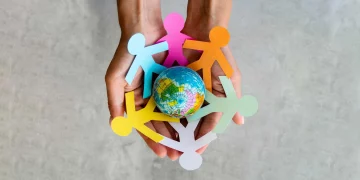
Given the increasing complexity of global societies, many argue that the future of cultural identity lies in hybridity. A hybrid identity is one that blends elements from different cultures, creating something new and unique. This type of identity reflects the reality of living in a multicultural society, where boundaries between cultures are porous and constantly shifting.

Hybrid identities do not require individuals to choose one culture over another but allow them to navigate between cultures fluidly. This adaptability can be seen in many aspects of modern life. For instance, second-generation immigrants might celebrate both traditional holidays from their parents’ culture and those of their new country. They may speak multiple languages and partake in cultural practices that merge the old and the new.
The rise of hybrid identities is a testament to the resilience of culture in a multicultural world. Far from erasing cultural identities, multiculturalism can enhance them by fostering creativity and cross-cultural exchange. The survival of a single cultural identity, then, may not require its rigid preservation but rather its ability to evolve and adapt to new contexts.
The Role of Education and Media in Shaping Cultural Identity
Education and media play pivotal roles in how cultural identities are perceived and preserved. In multicultural societies, educational systems are tasked with fostering an appreciation for cultural diversity while also promoting a shared sense of civic responsibility and national belonging. Schools can be spaces where young people learn about different cultures and traditions, helping them develop a broader, more inclusive view of the world.
Media, too, is an essential force in shaping cultural perceptions. Television, films, and the internet provide platforms for diverse voices, allowing for the representation of a wide range of cultural experiences. However, media can also perpetuate stereotypes or marginalize certain cultural groups. As such, there is a need for media content that is both diverse and respectful of the many identities present in a multicultural society.
The media can also help preserve cultural traditions by showcasing them to a global audience. In this sense, the survival of a singular cultural identity in a multicultural world does not depend on isolation but on the ability to share and celebrate that identity in a global context.
The Future of Cultural Identity
As the world becomes increasingly interconnected, the idea of a single cultural identity may seem increasingly antiquated. Yet, the desire for a strong, unified cultural identity persists, especially in the face of rapid globalization. The key challenge lies not in the survival of a single cultural identity but in how it can evolve within a multicultural society.
Rather than erasing singular cultural identities, multiculturalism allows for their expansion and transformation. Cultural identities do not need to be fixed or exclusive but can be fluid and inclusive, accommodating the complexities of modern life. The future of cultural identity may lie not in the preservation of one culture above all others, but in the creation of new, hybrid identities that reflect the richness of a multicultural world.
Conclusion
Can a single cultural identity survive in a multicultural society? The answer is yes, but it will need to evolve. In a world where cultures blend and interact, the survival of a singular identity does not mean its isolation or resistance to change. It means embracing the fluidity of identity and allowing it to coexist with others, creating a more complex, dynamic, and inclusive cultural landscape.